MEX ConneXion Event 2026

June 23-25, 2026 - Ghent Belgium

For whom is this event

The MEX ConneXion Event is exclusively organised for vets and advisors that are interested in udder health and milk quality who want to connect with like-mineded peers.

World coverage

Veterinary practitioners and dairy advisors from Europe and beyond are brought together to connect and exchange knowledge & best practices on mastitis and milk quality.

Expert sessions

The latest scientific updates on mastitis and milk quality published by renowned experts are covered in keynote lectures and transferred into practice during the workshops.

Programme

On-farm workshop
June 23, 2026

  • Udder health  360°: Data. Diagnostics. Decisions.

Scientific programma
June 24, 2026

  • Keynote presentations covering latest updates
  • Messages from partners

Science into Practice
June 25, 2026

  • Practical case studies on mastitis and milk quality

Social programme
June 24, 2026

  • Get-together casual dinner

This event is powered by:

Welcome to MEX ConneXion 2026

Since the first live edition in 2019, MEX ConneXion has become a unique and dynamic meeting place for veterinarians and dairy consultants passionate about mastitis and milk quality. What started as an ambitious initiative has evolved into a well-estabilished event where science, practice and collaboration come together to drive meaningful progress in udder health.

After three virtual editions during the COVID-19 period, MEX ConneXion returned to an in-person format in 2023. In 2024, the event paused to host the National Mastitis Council Regional Meeting, further strengthening international collaboration within the udder health community. In 2025, MEX ConneXion resumed with an extremely successful edition, welcoming over 100 participants to the scientific programme and more than 50 participants to the on-farm workshop.

Building on this strong momentum, MEX ConneXion Event 2026 will once again offer a three-day programme that connects the latest scientific insights with practical application. Participants can expect high-level keynote sessions, valuable partner contributions and interactive discussions, followed by a strong focus on translating science into practice through real-life case studies and an on-farm workshop.

Join us in June 2026 and be part of MEX ConneXion – where knowledge connects and science meets practice.


We look forward to welcoming you in Ghent.

The MEX™-team

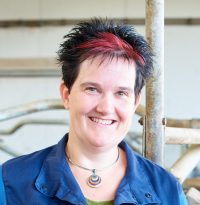
30-04-2015 - Twello / Deventer - Foto Ruben Meijerink
·        We willen een foto van dierenarts Christian Scherpenzeel.
Het wordt een staande foto waar de persoon van hoofd tot knie op staat (evt. mag je wat extra foto’s maken, bv van gehele persoon of alleen borstbeeld).
Op de achtergrond zie je koeien. Je kunt de foto dus maken in de stal (let op, kan soms donker zijn) of in het weiland (is natuurlijk het mooisteJ)
 c.scherpenzeel@gddiergezondheid.nl 
·        Je kunt een afspraak maken via Bert de Lange, persvoorlichter van de GD: 06-10477847

Christian Scherpenzeel

Christian Scherpenzeel studied veterinary medicine at Ghent University and the Faculty of Veterinary Medicine, Utrecht University. After graduating in Utrecht, he started working as a cattle veterinarian in a large practice in the middle of the Netherlands, with specific attention to udder health and antibiotic use. After a number of years in practice, he returned to the faculty in Utrecht, where he worked as a lecturer/researcher at the Department of Farm Animal Health Sciences. Since 2011 he has been working as a veterinarian at the Royal Animal Health Service in Deventer. In this work, his challenge is to combine science and practice, in close collaboration with dairy farmers, veterinarians and industry. He is head of the bovine team of 15 highly trained veterinary professionals (specialized and/or doctored bovine veterinarians) and cooperating frontman for the technical veterinary support and contract research regarding udder health, antimicrobial usage and milk quality, thereby fully aiming for high-quality goals. His research activities and key opinion focus on udder health, antimicrobial resistance and social aspects of modern dairy herd health management and several of his peer-reviewed publications were published in the Journal of Dairy Science. Dr. Scherpenzeel received his PhD in veterinary medicine from Utrecht University and his thesis focused on the effects of selective dry cow treatment in dairy cows on udder health, antimicrobial use, economics and social influences. Together with his team he carries out the ‘Udder Health Approach’. The combination of scientific and practical expertise on udder health management triggers a lot of national and international farm visits annually and resulted in significant experience in dairy consultancy and veterinary communication skills.

969A0392

Lien Creytens

As the daughter of a dairy producer, Lien developed a strong affinity for animals at an early age. She graduated in 2017 as a veterinarian specialized in ruminants, after which she immediately started working in practice and gained experience as a bovine veterinarian but also within the veal and companion animals sector. In 2021, she returned to the Faculty of Veterinary Medicine to start a PhD within the M-teamUGent, which she successfully defended in 2026. During her PhD, she supported Flemish dairy producers and bovine veterinarians in implementing selective treatment of non-severe clinical mastitis using an on-practice culture approach, while also investigating the effects of this treatment strategy on udder health and production. This research provided valuable insights for the further development of selective treatment using rapid testing systems within the Flemish dairy sector.

20201014_141030

Nicolas Herman

Nicolas Herman is a French veterinary practitioner specializing in bovine health management and a Diplomate of the European College of Bovine Health Management (ECBHM). Based in Riom-ès-Montagnes, he combines extensive field experience with academic and consulting activities, supporting both beef and dairy farms in areas such as reproduction, nutrition, housing, lameness, metabolic diseases, udder health, BRD, and calf diarrhoea. He graduated from the National Veterinary School of Toulouse in 2012 and completed his ECBHM residency there between 2014 and 2019. His veterinary thesis, published in the Journal of Dairy Research, focused on milk indicators for estimating the prevalence of subclinical ketosis and ruminal acidosis. In addition to clinical practice, Nicolas is a lecturer at the University of Toulouse, teaching herd health management at master’s level. He also serves on the editorial committee of Bulletin des GTV and co-manages a veterinary team of ten professionals.

Paweł Panasiuk Biofarmtech

Paweł Panasiuk

Paweł Panasiuk is an independent milking system diagnostics specialist focused on dynamic testing and practical decision-making in udder health. His work combines technical expertise in milking systems with hands-on analysis of how systems truly behave during real milking — not only under static test conditions.

He works with a wide range of dairy operations, from smaller family farms to large commercial herds, including both conventional parlours and automatic milking systems. His main focus is dynamic milking system testing, on-farm audits, and training veterinarians, dairy consultants, and technicians.

Paweł specialises in translating complex milking data into practical insights. By linking system behaviour, milking routines, and cow responses, he helps professionals make evidence-based decisions that directly impact somatic cell count, mastitis patterns, and milking efficiency. His approach bridges science and practice in real farm conditions.

JB18-0919-5995c

Yvette de Haas

Yvette de Haas is a senior scientist specializing in Precision Phenotyping in the Department of Animal Breeding and Genomics at Wageningen Livestock Research in the Netherlands. Her work focusses on improving livestock through genetic selection, with a focus on adding novel traits or better phenotypes to the breeding goals, in particular for dairy cattle. As an example, during her PhD (1999-2003) she investigated a better phenotype for pathogen-specific clinical mastitis, by using somatic cell count patterns instead of lactation-average cell counts. Her work involved the use of high-dimensional longitudinal sensor data and time-series analyses to retrieve new information for a better phenotype. A recent example of a novel trait is the new breeding value for enteric methane emissions of individual dairy cattle in the Netherlands (introduced in 2025). Her work then also involved to set up a new national data recording in order to collect the required data longitudinally on a large scale.

Piepers

Dr. Sofie Piepers

Sofie Piepers graduated as a vet in 2005 and since that time she has been a member of M-team UGent. After graduation, Sofie immediately started working on her PhD on heifer mastitis at the Department of Internal Medicine, Reproduction and Population Medicine. In 2010, she obtained her degree of Doctor in Veterinary Medicine at the Faculty of Veterinary Medicine of Ghent University (Belgium). She is currently managing director of MEX™ (www.mexcellence.eu), a spin-off of Ghent University that is specialized in the development of trainings and tools to make mastitis management easy for vets and other dairy advisors. Since 2019, she is also appointed as visiting professor at Ghent University. She is passionate about mastitis and milk quality. As a veterinarian and researcher, Sofie uses her expertise to coach and train vets in mastitis management and encourages them to become the best udder health experts they can be. She loves networking, collecting new information at scientific conferences, and later turning that knowledge into practice. In 2014, she was co-organizer of the first National Mastitis Council Regional Meeting outside the US and Canada. As well, she is co-editor-in-chief of M²-magazine (www.m2-magazine.org).  

Sarne De Vliegher_2

Dr. Sarne De Vliegher

Sarne De Vliegher graduated as a veterinarian from Ghent University in 1998. He defended his PhD-thesis on heifer mastitis in 2004 in Ghent after having worked at the Atlantic Veterinary College of the University of Prince Edward Island, Canada for some months. In that same year he finished an MSc in Veterinary Epidemiology and Animal Health Economics at Utrecht University, The Netherlands, and obtained a degree as a judicial expert from Ghent University. In 2006 he became a Diplomate of the European College of Veterinary Public Health. In the meantime, he worked in the bovine veterinary practice of the Faculty of Veterinary Medicine for 7 years. He is a full professor teaching veterinary law, professional ethics and practice management at the Department of Internal Medicine, Reproduction and Population Health (Faculty of Veterinary Medicine). He is heading M-teamUGent and is co-founder of and partner in MEXTM. He was president of the US-based National Mastitis Council in 2020 after having served 10 years as a board member. He is co-editor-in-chief of M²-magazine and published a handbook on bovine udder health together with Dr. Theo Lam. In 2018 he received the Westagro award from the American Dairy Science Association. Between 2013 and 2016 Sarne served as the president of the Flemish Regional Council of the Belgian Board of Veterinarians and as vice-president of the Belgian Council of Veterinarians after having been a board member of both organisations between 2010 and 2013, illustrating his keen interest in the different aspects of the veterinary profession. In 2023 he resumed as board member of the Belgian Council. In 2020 he established the Institute for Law and Ethics in Veterinay Medicine and is a co-promoter of the Research Chair on Animal Law, Ethics and Welfare, in close cooperation with the University of Leuven. Since 2023 he is heading the effort to establish a B2C animal welfare label in Belgium.